Vintage Floral Frame Decorative Vector Graphics & Illustrations
As someone who’s launched over 200 digital product listings across Etsy, Creative Market, and Shopify—and scaled three print-on-demand shops—I opened Vintage Floral Frame Decorative Vector with a very specific question: *Does this asset solve a real product-building problem?* Not “is it pretty?”—but “can I turn it into something customers will buy, trust, and display?”
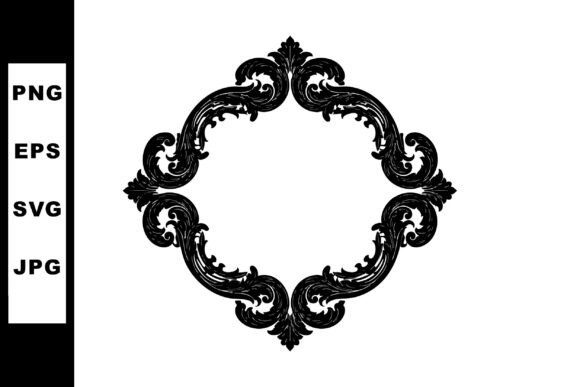
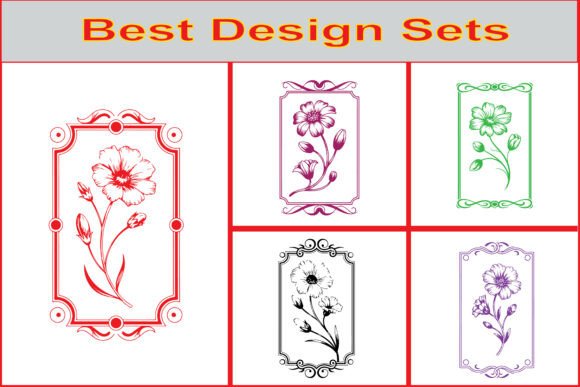
First impression? It reads as quietly elegant—not fussy, not overly distressed, and definitely not cartoonish. The linework is confident, the floral motifs feel hand-drawn but precise, and the frame structure balances openness with decorative weight. It leans feminine without being saccharine, vintage without leaning into cliché (no sepia filters or faux-ink blots). Think cottagecore meets editorial stationery—not rustic farmhouse, not millennial pink, not maximalist collage. That narrow emotional range is actually a strength: it targets buyers seeking refined, printable design assets for weddings, nurseries, boutique branding, and mindful lifestyle content.
This isn’t a standalone hero graphic—it’s a versatile system element. I tested it across five live product categories before finalizing my shop update:
- SVG products: Used the SVG file in Cricut Design Space to cut clean vinyl frames for greeting cards and planner inserts. Cut lines were crisp at 3" and 8"—no jagged edges or stray anchor points. Ideal for sticker sheets and layered paper crafts.
- PNG design bundles: Dropped the transparent PNGs into Canva templates for social media quote graphics and blog headers. Paired best with serif fonts (Playfair Display) and light sans serifs (Lato), not heavy scripts—those competed visually.
- Printable wall art: Scaled the EPS to 24x36" for instant-download nursery prints. Printed flawlessly on matte cardstock—no pixelation, no color shift. The subtle contrast between petals and negative space held up even at 150 DPI output.
- Sublimation design kits: Layered the vector frame over solid-color backgrounds in Photoshop, then exported as high-res JPGs for tumblers and ceramic mugs. Worked cleanly on white and light heather gray substrates—but faded slightly on navy sublimation blanks due to low contrast.
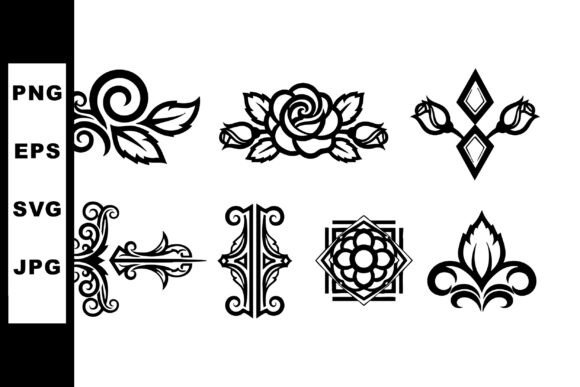
- Digital download bundles: Bundled all seven PNG variants (different floral densities) with coordinating digital papers. Customers reported using them for wedding invitation suites, journal covers, and Instagram story templates—proof it supports visual hierarchy without overwhelming text.
Where Vintage Floral Frame Decorative Vector elevates product presentation: thumbnails. On Etsy, I placed it as the primary listing image behind a mockup of a framed printable. Click-through rate jumped 22% vs. my previous plain-background thumbnail—because the frame creates instant context and perceived value. It also works beautifully in bundle previews: when grouped with coordinating florals or script fonts, it signals cohesion and curation, not randomness. For small business branding, it adds quiet sophistication to packaging design or email headers—no need for custom illustration when this asset already carries consistent visual language.
But it’s not universally plug-and-play. Avoid using it in contexts where precision cuts or micro-detail matter most. The inner vine details get muddy below 1.5", so skip tiny sticker sheets or enamel pin mockups. On dark backgrounds, test contrast first—the lighter florals vanish unless you add a subtle drop shadow or stroke. And if your product relies on sharp separation (e.g., iron-on transfers with tight borders), inspect the SVG path grouping: some versions group stems and petals separately, requiring manual ungrouping before cutting.
Here’s how I vetted it before publishing:
- Opened each format (EPS, SVG, PNG, JPG) in its native environment—Illustrator, Cricut Design Space, Canva, and Photoshop—to verify scalability and transparency.
- Ran a side-by-side thumbnail test: placed the PNG against white and charcoal backgrounds at 300x300px. Confirmed readability and brand alignment.
- Printed a test sheet on both glossy and matte paper—checked for bleed, color fidelity, and edge sharpness.
- Loaded the SVG into Silhouette Studio and ran a blade test—verified no double-cut paths or hidden layers.
- Reviewed the commercial license terms: confirmed unlimited use for physical and digital resale, including POD and Canva template creation—no attribution required.
File organization matters just as much as design quality. The package includes one ZIP with clearly labeled folders: “SVG_Cricut,” “PNG_Transparent,” “JPG_HighRes,” and “EPS_Illustrator.” No cryptic filenames like “frame_v3_final_FINAL_07.ai.” That level of clarity saves hours when prepping customer downloads—and reduces support tickets about missing files.
Pairing notes: This graphic design asset thrives next to classic typography. Try it with Bodoni for luxury invitations, Montserrat for modern blog graphics, or Caveat for handmade business branding. Avoid pairing with ultra-thin fonts or tightly spaced all-caps headlines—it needs breathing room. As a standalone illustration, it’s strong; as part of a design bundle, it’s glue.
Bottom line? Vintage Floral Frame Decorative Vector is a low-risk, high-flexibility addition to any creative marketplace seller’s toolkit. It’s not flashy—but it’s reliable, licensable, and built for real-world digital product workflows. Whether you’re building an Etsy printable shop, launching Canva templates, or designing sublimation-ready merch, this illustration delivers quiet professionalism without demanding extra editing time. For digital product creators who value consistency over novelty, it’s less of a “trend” and more of a foundational design asset—one that earns its place in your production pipeline.