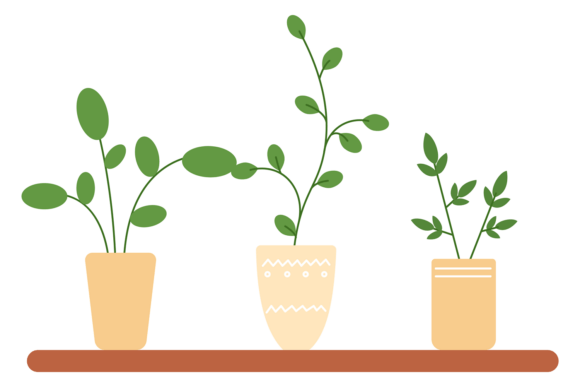
Urban Jungle Plants. Decorative Interior Graphics
As someone who’s launched over 200 digital product listings across Etsy, Creative Fabrica, and Shopify—mostly illustration-based bundles for crafters and print-on-demand sellers—I opened Urban Jungle Plants. Decorative Interior expecting a predictable set of monstera leaves and snake plants. What I got was something more intentional: a cohesive, studio-grade collection of interior-focused green houseplants, cleanly isolated, with subtle botanical personality and real commercial flexibility.
The mood is calm but curated—modern organic, not boho clutter. It leans into quiet elegance rather than playful whimsy or bold minimalism. Think apartment dwellers refreshing their Instagram feed, small business owners designing calming wellness brand assets, or Canva template sellers building “slow living” planner kits. It’s decorative without being fussy, detailed without sacrificing scalability. That balance matters—especially when you’re bundling for Etsy or prepping sublimation designs for Redbubble.
This isn’t just clipart. Urban Jungle Plants. Decorative Interior works as a graphic design asset because each plant feels like part of a visual system: consistent line weight, harmonized negative space, and thoughtful isolation that holds up at multiple sizes. The white-background isolation (available in SVG, transparent PNG, JPG, and EPS) means it slots cleanly into product mockups, Canva templates, or Cricut projects without layering guesswork. No jagged edges, no stray pixels—just clean, ready-to-deploy illustrations.
Here’s how I tested it across real selling scenarios:
- SVG products: Used the SVG files for Cricut Joy and Explore Air 2 projects—tested cut accuracy on vinyl and cardstock. Clean paths, no overlapping nodes. Works well for sticker sheets, wall decals, and nursery decor.
- PNG design bundles: Paired the transparent PNGs with soft watercolor textures for printable wall art collections. Held up beautifully at 300 DPI prints—even scaled to 24x36” without blurring.
- Sublimation design: Imported SVG into Design Space, resized for tumblers and ceramic mugs. Printed crisp results on polyester blends with no halo or bleed issues.
- Canva template integration: Dropped PNGs into editable Canva layouts for social media quote graphics and blog banners. Blended naturally with both serif (Playfair Display) and sans serif (Inter) fonts—no visual competition.
- Print-on-demand: Uploaded to Printful as standalone mug and tote bag designs. Thumbnail preview looked strong—distinctive enough to stand out in a sea of generic leaf motifs.
Where Urban Jungle Plants. Decorative Interior shines most is in visual storytelling and perceived value. Because the plants are styled as *interior* elements—not botanical specimens—they support lifestyle branding. You can use them to build cohesive seasonal bundles (“Spring Refresh Kit”), nurture a brand identity around mindful living, or add warmth to otherwise clinical digital paper packs. In marketplace listings, they boost click-through potential: thumbnails feel intentional, not generic. Customers scanning for “calm,” “plant mom,” or “Scandinavian interior” visuals pause longer.
It also helps with product presentation—especially mockup previews. The clean isolation lets you drop these illustrations onto realistic room scenes (think neutral-toned living rooms or sunlit home offices) without distracting backgrounds. That builds trust: buyers see exactly how the design lives in context, not just as a floating PNG. For Etsy sellers, that’s critical for reducing returns and increasing average order value via bundles.
That said, there are places to proceed carefully. Avoid using the smallest PNG variants for tiny sticker details—some leaf veins soften below 1.5”. Don’t force it into text-heavy greeting card templates where visual hierarchy suffers. And while the SVGs cut cleanly, double-check path direction if you’re using Silhouette Studio—the default export assumes standard cut settings, not kiss-cut vinyl.
Before publishing any listing, I always run these practical checks:
- Preview the PNG on both white and dark mockup backgrounds—verify contrast and edge clarity.
- Test print one design at actual size on your target paper stock (e.g., matte photo paper vs. kraft cardstock).
- Open the SVG in Cricut Design Space and run a “cut preview”—confirm no hidden layers or compound paths.
- Zoom to 400% in Illustrator to inspect anchor points and transparency integrity.
- Organize customer-facing files clearly: “SVG_Cut_Ready”, “PNG_Transparent_300dpi”, “JPG_Web_Optimized”.
- Confirm the commercial license explicitly permits finished product resale—no attribution required, no limits on units sold.
Pairing matters too. These illustrations work best with typefaces that echo their tone: light serifs for elegance, rounded sans serifs for approachability, or delicate scripts for invitation templates. Avoid heavy display fonts unless used sparingly as accents—this collection thrives on breathing room.
For creative entrepreneurs building a handmade business or scaling digital downloads, Urban Jungle Plants. Decorative Interior isn’t just another clipart pack. It’s a versatile, production-ready illustration set that supports brand consistency, reduces design time, and elevates perceived quality across merchandise, templates, and social media graphics. It fits seamlessly into design bundles, packaging design, and small business branding—especially for niches centered on wellness, slow living, interior styling, or eco-conscious creativity.
If you're curating a seasonal digital download shop or launching a new POD line, treat this as a foundational graphic design asset—not filler. Test it early, pair it intentionally, and let its quiet confidence do the work. In crowded creative marketplaces, subtlety with precision often outsells flash every time.